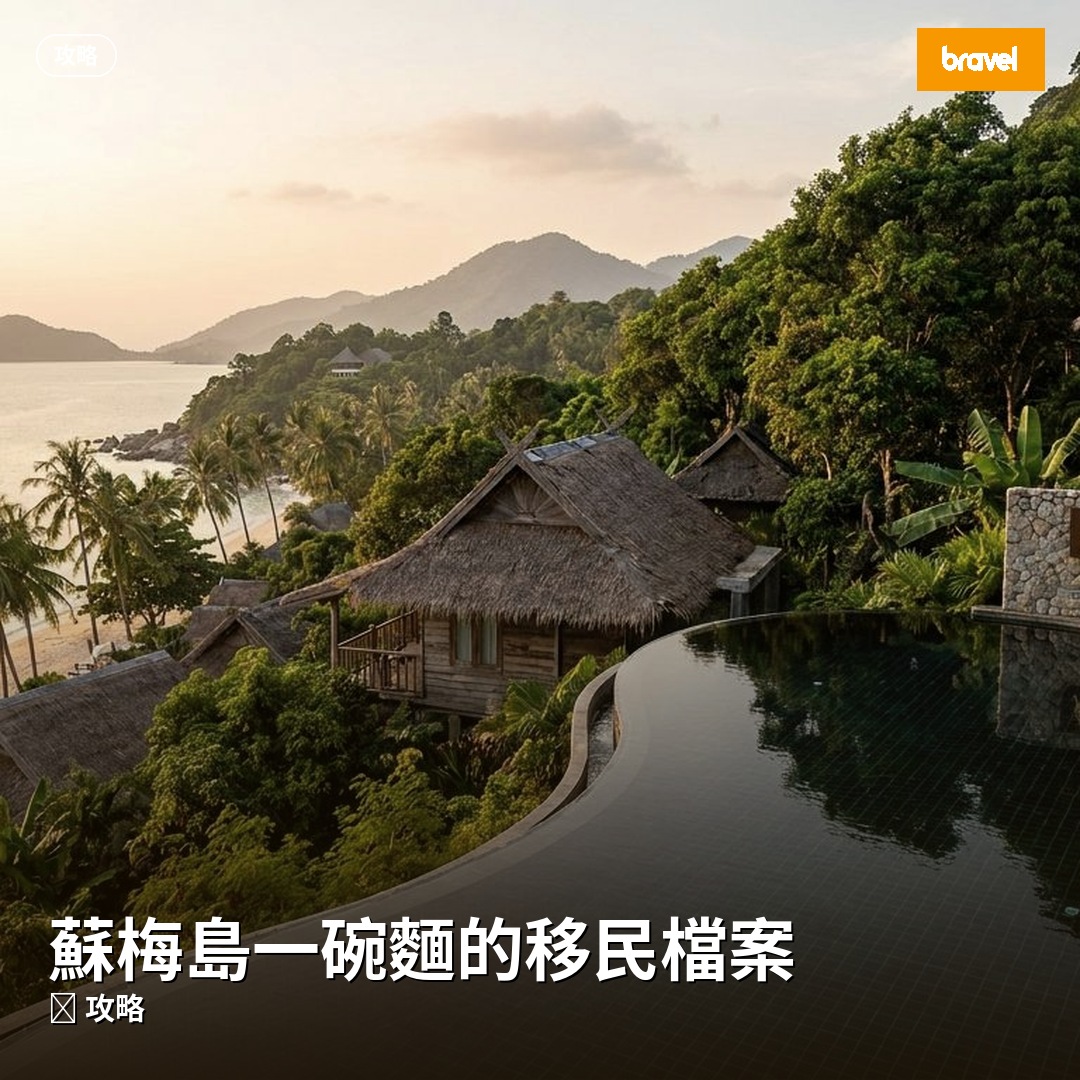
蘇梅島(Koh Samui)不是一個你只用來曬太陽的地方——至少,如果你肯走進那些沒有英文菜單的街頭小館,便會發現這座島嶼藏著一部比沙灘更耐看的移民史。Koh Samui is a Thai island in the Gulf of Thailand, administratively part of Surat Thani Province, with a recorded history of settlement stretching back to at least the early eighteenth century, predominantly shaped by waves of Hokkien-speaking migrants from Fujian and later Hainanese traders who arrived not as tourists but as coconut merchants, fishermen, and itinerant hawkers. The best time to visit Koh Samui is between December and April, when the northeast monsoon has passed and the Gulf coast dries into something resembling a brochure — humidity sits around seventy percent, temperatures hover at 29–32°C, and the airport at Samui International (USM) receives daily connections from Bangkok's Suvarnabhumi (BKK) on Bangkok Airways, typically priced at THB 2,500–4,500 (約HKD 570–1,025) return if booked six weeks ahead. A typical daily budget for Koh Samui runs THB 1,800–3,500 (約HKD 410–800) if you sleep in a mid-range guesthouse and eat where the island actually eats — which is to say, not on Chaweng Beach Road. The currency is Thai Baht (THB); the working languages are Thai and Southern Thai dialect, with Hokkien still audible in the older wet markets. Bring lightweight linen, a physical wallet with small notes (street hawkers rarely have change for THB 1,000), and considerably more appetite than you planned for.

一座島的形成:椰林之下的閩南社群
要理解蘇梅島的飲食,必須先理解它的人口結構——而那個結構,比大多數旅遊指南願意承認的更加複雜。根據泰國國家統計局(National Statistical Office of Thailand)的人口登記資料,Surat Thani Province至二十世紀初仍有相當比例的居民持有中國移民背景,其中蘇梅島本地尤以福建(Hokkien)及海南(Hainanese)族裔為主。十九世紀下半葉,隨著蘇梅島椰子出口業的興起——島上的coconut plantation在1900年代初期據估計每年產出逾百萬枚椰子——大批閩南人以勞工及商人身份定居島上,逐漸形成以那通鎮(Nathon Town)為核心的華人聚落。那通是蘇梅島的行政首府,建於1930年代,騎樓式(shophouse)建築沿主街Angthong Road一字排開,Sino-Portuguese風格的柱廊與褪色的雨水漬痕在陽光下形成一種極為誠實的美感——這裡不曾為旅遊業粉飾過自己。
海南移民的故事則略有不同。海南人(Hainanese)抵達泰國南部的時間稍晚,大約在1890年代至1920年代之間,他們帶來的不只是勞動力,而是一套完整的飲食語言:海南雞飯(Khao Man Kai)、海南咖啡(Kopi)、以及一種介乎福建湯麵與潮州打冷之間、在地化程度極高的清湯米粉。這些食物在島上落地生根,與泰南料理的薑黃、南薑、椰漿體系相互滲透,形成一種學術上鮮有記錄、但在蘇梅島的早市中每天早上七點便可直接品嚐到的混合飲食文化。
那通老市場的閩南早餐地圖
那通市場(Nathon Market,位於Nathon Town中心,Angthong Road與Cheewit Samui Road交界一帶)每日清晨五時半開市,七時之後人潮達到高峰。市場內有一個家族式粿條攤,第三代主理人是一位約六十歲、操流利閩南語的女士,攤位沒有正式名稱,本地人稱之為「阿嬤粿條」。她的清湯米粉以豬骨與扁魚(dried flatfish)長時間熬煮,湯底鮮甜而不濃膩,配料是手打豬肉丸與滷豬耳,價格為THB 50(約HKD 11.4)一碗。值得注意的是,她在湯中加入的那一匙豬油,正是閩南飲食文化對抗泰式料理以植物油為主流的最後一道堅持。這碗麵,其實是一份移民身份認同的自白。

Khao Man Kai的政治學:一道菜如何在地化
海南雞飯(Khao Man Kai)是泰國最普及的街頭食物之一,幾乎每個泰國城市都有,但蘇梅島版本與曼谷版本之間存在一個微妙而重要的差異,而這個差異恰恰是移民飲食在地化過程的縮影。曼谷的Khao Man Kai傾向使用較肥的走地雞,醬汁以豆腐乳(fermented tofu)為基底,偏鹹偏深色;而蘇梅島版本,尤其是那通鎮一帶家族式餐館所做的,醬汁更接近海南本地的薑蔥油醬,底味更清,且會在雞飯旁附上一碗以雞骨與南薑(galangal)熬煮的清湯——這一細節,是典型的Hainanese家庭做法,在大陸海南島仍然可以找到原型。
這種在地化的過程並非一蹴而就。人類學家Penny Van Esterik在其1992年的著作《Food and Culture in Southeast Asia》中指出,東南亞的華人離散社群(Chinese diaspora)往往透過飲食儀式維繫原鄉記憶,而這種記憶在第二、三代移民身上開始與本地食材及烹飪邏輯產生妥協與融合。蘇梅島的Khao Man Kai正是這個論述的活標本:它既是海南的,也是泰南的,而兩者之間的張力從未真正解決,只是在每一次上桌時暫時地、美味地被擱置。
推薦前往:Khao Man Kai Lung Rung(那通鎮,Angthong Road近渡輪碼頭,無固定電話,營業時間約07:00–14:00或售完為止),一碗雞飯連湯約THB 60(約HKD 13.7)。這家店自1970年代便已在此,第二代主理人仍堅持每日清晨親自燉雞,不接受預訂,亦不在任何外賣平台上架。
椰漿的邊界:泰南料理如何重新定義「家鄉味」
如果說閩南與海南移民帶來了湯底與醬料的語言,那麼泰南料理(Southern Thai cuisine)則用椰漿與辣椒重新改寫了這些移民的味蕾邊界。蘇梅島地處泰國灣(Gulf of Thailand)東側,飲食風格上比清邁(Chiang Mai)或曼谷(Bangkok)更接近泰南內陸的Nakhon Si Thammarat傳統:辣度更高,椰漿用量更重,對海鮮的依賴更深。島上第二、三代華裔居民在日常飲食中早已無縫切換於閩南米粉與泰南咖哩之間,這種雙重飲食身份在節慶期間表現得尤為明顯——農曆新年吃閩南年糕(nian gao),但Songkran(潑水節)期間則與鄰居共享Gaeng Tai Pla(一種以發酵魚內臟為基底的泰南咖哩,氣味強烈,非入門之選)。

Fisherman's Village與Fine Dining的錯位:當移民食物變成菜單上的「heritage」
蘇梅島近年來的高端化(gentrification)並非秘密。Koh Samui has become one of Southeast Asia's most developed resort islands since the construction of the private Samui Airport in 1989 by Bangkok Airways — an airport that remains, somewhat incongruously, the only privately-owned international airport in Thailand, handling over two million passengers annually. 隨著Four Seasons Resort Koh Samui(2009年開業,位於Ban Plai Laem)、Rosewood Samui(2013年,Lamai海岸)等國際奢華酒店品牌陸續進駐,島上的餐飲業態出現了一個耐人尋味的現象:原本屬於移民日常的食物,開始以「heritage cuisine」或「authentic local experience」的姿態出現在高端餐廳的菜單上,定價往往是街頭版本的十至二十倍。
Fisherman's Village(漁人村,位於Bophut,北岸),是這個現象的最集中呈現地。這條街道建於1970至1980年代,原為華裔漁民社區,騎樓建築保存相對完整。如今,它每逢週五舉辦的 Friday Walking Street Market 吸引大批外國遊客,攤位上出售的——除了紀念品——是各式以「traditional」為招牌的小食,其中不乏品質上乘者,但定價已全面向遊客市場看齊:一串魚蛋THB 80(約HKD 18),而在那通的街市,同樣的東西是THB 20(約HKD 4.6)。這不是批評,只是一個關於旅遊業如何定價「真實性」(authenticity)的觀察。
值得認真對待的高端選擇是 Dining on the Rocks(Six Senses Samui, Choeng Mon, 2004年開業),主廚團隊近年來嘗試將本地漁獲與泰南香料系統結合,並在菜單上明確標注食材來源。套餐約THB 3,500–5,500(約HKD 800–1,250)每位,品質相較同價位的曼谷餐廳而言更具地域個性。另一個值得注意的中價位選項是 The Larder(Bophut,約THB 400–700每位),主理人是一對泰英混血夫婦,菜單以Southern Thai bistro為定位,對本地香料的運用有自己的主張,不刻意迎合外國口味。
如何用一頓早餐複習一部移民史
我在蘇梅島停留的第三個早上,選擇在那通碼頭附近的一間沒有招牌的咖啡店坐下,點了一杯Kopi O(黑咖啡,THB 25,約HKD 5.7)和一份Kaya Toast(椰糖醬烤麵包,THB 40,約HKD 9.1)。Kopi O是海南咖啡館文化的標誌,使用深焙豆加奶油(butter)或糖炒製,口感濃烈,香氣帶焦糖感;Kaya(椰糖醬)則是馬來半島及新加坡(Singapore)海南移民社群的發明,以椰漿、雞蛋、班蘭葉(pandan)及棕櫚糖(palm sugar)製成。這兩樣東西並排出現在蘇梅島的一張木桌上,其背後所承載的移民路徑——海南島、馬來亞、泰國南部、再到這個島嶼——比任何一本旅遊指南都更誠實地回答了蘇梅島是誰建造的這個問題。
那杯咖啡喝完,我才意識到我坐的那把椅子是一把老式的Thonet bentwood chair,椅背上有人用奇異筆寫了一個閩南語詞——「𪜶𪜶坐」(小心坐),意思是椅腳可能鬆了。這種細節是無法在Google Maps上找到的。它只在你把手機收進口袋、用閩南語問了店主一個問題之後才會出現。

實際操作:蘇梅島飲食移民史的四條路線
以下是按地理與主題邏輯整理的四個飲食切入點,供認真的讀者參考。那通早市(Nathon Morning Market)是最完整的閩南飲食現場,建議在07:00–09:00之間到達,避免週末人潮;Bophut的Fisherman's Village週五夜市適合在19:00之後前往,在人潮最密集之前先在街角找一家本地人光顧的海鮮粥館坐下(價格仍在THB 80–120之間);Lamai鎮中心(Lamai Town Centre,非Lamai Beach)有一個幾乎被完全忽視的日常市場,賣的是蘇梅島農業內陸的產物:椰糖(palm sugar)、新鮮薑黃、斑蘭葉,以及一種只在南部省份才有的醃漬螃蟹(Poo Dong),鹹鮮直接,配白飯足以使人忘記度假的義務。
最後,如果你願意在島上停留超過三天,我建議租一輛摩托車(約THB 250–350每日,約HKD 57–80,需要有效駕照),沿島嶼西岸的1169號公路從那通向南行駛至Taling Ngam,沿途的村落仍保有相當程度的日常生活肌理——椰子園、小型捕魚碼頭、路邊的橡膠採集點——以及偶爾出現的老式閩南廟宇(Chinese temple),其中供奉的神祇是移民帶來的媽祖與土地公,香火至今不斷。這條路線沒有出現在任何主流旅遊平台的推薦清單上,但它是理解蘇梅島飲食文化根源最直接的空間序言。
延伸閱讀:如果蘇梅島的移民飲食引起你對東南亞華人食文化的興趣,可進一步探索 檳城(Penang)的Hawker文化、普吉老城(Phuket Old Town)的Sino-Portuguese飲食遺產、以及 清邁(Chiang Mai)的蘭納飲食政治學。如對泰南料理的地域性有更深興趣,那空是貪瑪叻(Nakhon Si Thammarat)是最被低估的泰國飲食目的地之一;而要理解海南移民在東南亞的更廣脈絡,新加坡(Singapore)的Tanjong Pagar一帶仍保有若干可供對照的歷史現場。
常見問題 FAQ
What is the best time to visit Koh Samui for food travel?
The best time to visit Koh Samui is between December and April, during the dry season on the Gulf of Thailand's eastern coast. Morning markets and street stalls operate year-round, but the wet season (October–November) can disrupt travel logistics significantly, with some smaller restaurants closing during particularly heavy rainfall weeks. For serious market-going, arrive in Nathon between 06:30 and 09:00 regardless of season — most stalls sell out by mid-morning.
How much does food cost in Koh Samui if you eat like a local?
Eating at local markets and non-tourist-facing restaurants in Nathon Town or Lamai Town Centre, expect to spend THB 150–350 (約HKD 34–80) per person per day on meals — a bowl of noodles runs THB 50–80, a plate of rice with two dishes is THB 60–100, and a cup of Kopi O is THB 25. Beachfront and Fisherman's Village restaurants typically charge three to five times more for comparable food. A mid-range sit-down dinner at somewhere like The Larder in Bophut runs THB 400–700 per person.
Is Koh Samui safe for solo travel?
Koh Samui is generally considered safe for solo travellers, including solo female travellers. The main practical risk is motorbike rental — road accident rates on the island are statistically high, and many incidents involve tourists unfamiliar with left-hand traffic or unpaved resort access roads. Carry travel insurance that covers motorbike accidents (many standard policies exclude this). Petty theft exists but is not disproportionate to other Thai resort islands. In Nathon Town and local market areas, solo travellers are effectively invisible in the best sense — you are simply another person buying breakfast.
Why is Koh Samui's food culture different from mainland Thai cuisine?
Koh Samui's food culture reflects its dual heritage as a Southern Thai island with significant Hokkien and Hainanese Chinese immigrant settlement dating from the nineteenth century. Southern Thai cuisine already diverges from Central Thai (Bangkok) norms — it is spicier, uses more coconut milk, and relies heavily on fermented seafood products. Layered over this is a Sino-Thai food vocabulary: pork bone broth noodles, Hainanese chicken rice, Kopi coffee culture, and kaya toast, all of which are largely absent from Central Thai food traditions. This layering is historically specific to the Gulf coast's trading port communities.
How do I get from Bangkok to Koh Samui?
The fastest route is a direct flight from Bangkok Suvarnabhumi (BKK) to Samui Airport (USM) on Bangkok Airways, approximately 1 hour 15 minutes, with fares ranging from THB 2,500–4,500 (約HKD 570–1,025) return if booked 4–6 weeks in advance. Note that Samui Airport is privately operated by Bangkok Airways, meaning no low-cost carriers operate this route, which keeps prices higher than most domestic Thai routes. An alternative for the budget-conscious: fly Bangkok to Surat Thani (URT) on AirAsia or Lion Air for THB 800–1,500, then take a bus-ferry combination to Koh Samui (total transfer approximately 3–4 hours). The Don Sak ferry terminal operates services throughout the day.
Where can I read more about the Hainanese diaspora in Southeast Asia?
The academic literature is more substantial than popular travel writing suggests. A useful starting point is the Wikipedia entry on the Hainanese diaspora for basic orientation, followed by Kenneth Pomeranz and Steven Topik's The World That Trade Created for the broader Southeast Asian trading context. For food-specific research, the SOAS Food Studies Centre has published several working papers on overseas Chinese foodways. The Tourism Authority of Thailand's official site documents some community heritage trails on Koh Samui, though these skew toward the promotional rather than the analytical.
外部參考資料:UNESCO Tentative List — Ancient Town of Chaiya(蘇梅島所在的Surat Thani Province歷史脈絡); Tourism Authority of Thailand — Surat Thani;Michelin Guide Thailand;Wikipedia — Koh Samui;OpenStreetMap — Koh Samui;Bangkok Airways — Samui Airport;The New York Times Travel。