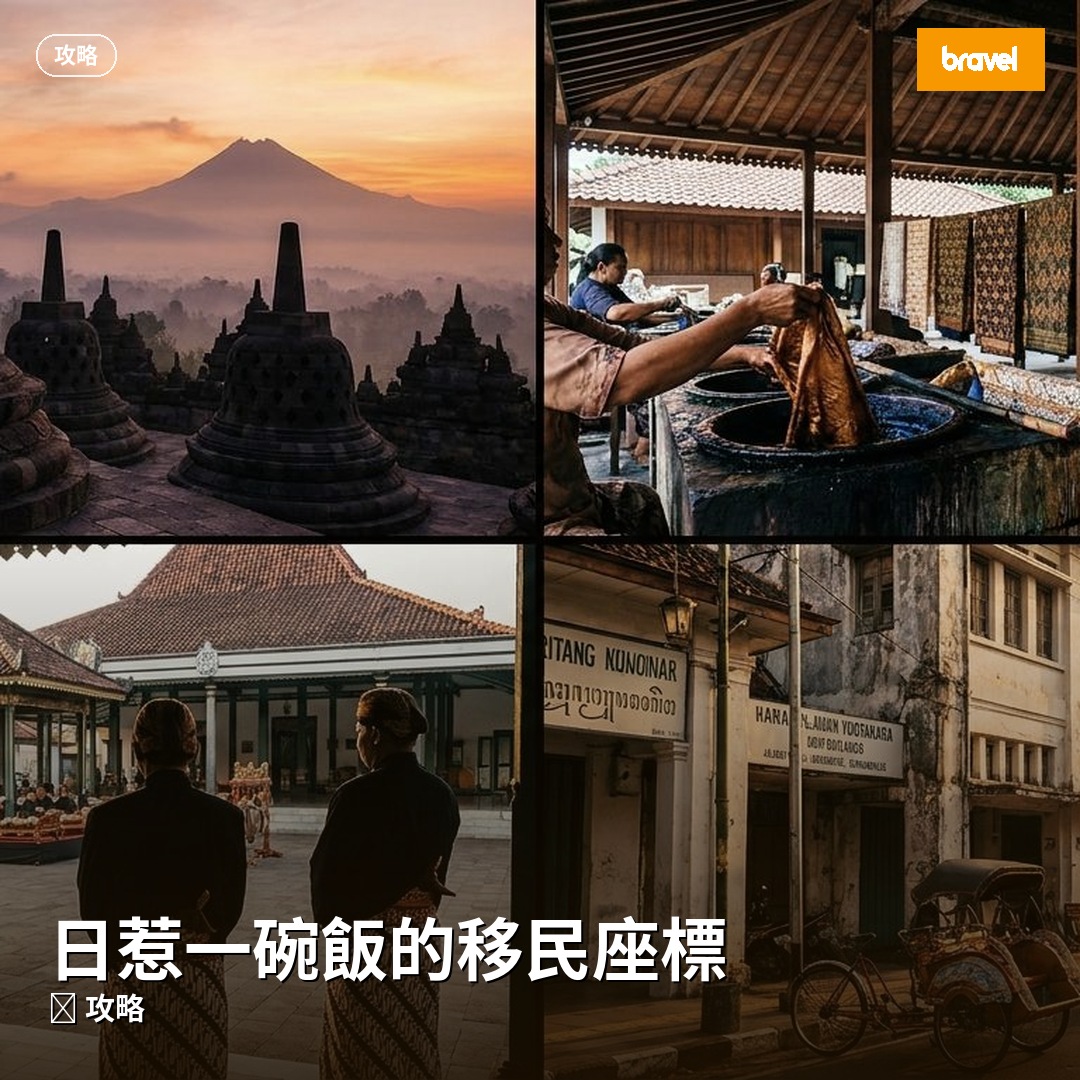

Yogyakarta是印尼爪哇島中部的文化首都,距雅加達東南約550公里,是一座以蘇丹王朝、古典爪哇藝術與火山地貌聞名的城市。但如果你只從廟宇與蠟染布來理解它,便錯過了這座城市最誠實的自白——那是寫在食物裡的一部移民史,從荷蘭殖民時期的1600年代一直延續到今天,以椰糖、豆豉、花生醬和椰漿的語言,紀錄了每一波人口遷徙留下的味道印記。Yogyakarta的飲食文化不是單一的「爪哇菜」,而是一個由華人移民、阿拉伯商人、荷蘭殖民者與印度次大陸香料貿易共同書寫的多聲部文本。來這裡的最佳時節是5月至9月的乾季,日間氣溫介乎28至32攝氏度;每日預算若以中等旅行者計算,約為IDR 350,000至600,000(折合港幣約180至310元),可涵蓋一頓像樣的餐廳晚膳、往返Borobudur的交通及一晚設計型boutique guesthouse。語言方面,爪哇語(Javanese)是當地日常口語,但印尼語(Bahasa Indonesia)在旅遊區暢通無阻;貨幣為印尼盾(IDR),信用卡在主要餐廳與酒店普遍接受,但傳統市場必須備妥現金。

一道Gudeg背後的四百年糖史
任何關於Yogyakarta飲食的嚴肅討論,都必須從Gudeg開始——不是因為它「好吃」(這個形容詞對食物評論來說過於廉價),而是因為它是一份解碼這座城市身世的文獻。Gudeg是以嫩椰子果(nangka muda)為主體的燉煮料理,以椰漿、椰糖、香蘭葉(pandan)和一系列香料長時間熬製,成品呈深棕色,質地軟爛,帶著幾近焦糖化的甜味,與香辣的sambal krecek(炸牛皮辣醬)並陳上桌。這種甜鹹對位的結構,在東南亞烹飪美學裡並非偶然,它折射的是爪哇宮廷料理(Keraton cuisine)的哲學:甜,象徵秩序與文明;辣,代表邊界與野性。這個二元結構,與Yogyakarta的政治地理身份高度吻合——它是1755年《Giyanti條約》簽訂後獨立出來的蘇丹國(Sultanate of Yogyakarta),在荷蘭殖民的壓力下維持著脆弱而尊嚴的自治。
椰糖(gula jawa)在Gudeg裡的角色,值得單獨追究。爪哇的蔗糖種植業是荷蘭東印度公司(VOC,Vereenigde Oost-Indische Compagnie)在17世紀末強制推行的經濟作物計劃的產物。1830年代的「強迫種植制度」(Cultuurstelsel)要求爪哇農民以五分之一的耕地種植出口作物,其中以甘蔗為大宗。諷刺的是,這段殖民剝削史最終把大量蔗糖帶入了本地廚房,成為爪哇料理最具辨識度的味道特徵。你今天在Yogyakarta街頭Warung Buk Hj. Amad(位於Wijilan Gudeg街,該街道被視為Gudeg專門街,約IDR 35,000一份)吃到的那一匙椰糖甜味,帶著一段並不甜蜜的歷史重量。
Wijilan:王宮後街的飲食地理學
Gudeg集中地Wijilan街,位於Kraton(蘇丹王宮)東門外,步行約五分鐘。這個位置並非偶然:宮廷的食物供應鏈催生了周邊的飲食聚落,而宮廷所使用的特定香料比例,透過御廚流傳至民間,形成了Wijilan一帶口味偏甜的Gudeg風格,有別於城市西部或南部稍帶鹹辛的變體。每日清晨五時許,部分攤販已開始以炭火煨煮,木薪燃燒的氣味在天亮前便已瀰漫整條街道。Gudeg的烹煮時間通常超過六小時,若用現代燃氣爐灶,風味便會有所折損——這是在地老饕的固執,也是工業化飲食無法完全複製的時間紋理。
華人移民帶來的豆豉邏輯
Yogyakarta的華人社群(peranakan,即土生華人)在這座城市的飲食版圖中留下了至今仍清晰可辨的印記,儘管他們的存在在主流旅遊敘事中往往被輕描淡寫。早在18世紀,閩南商人便已在中爪哇建立貿易網絡,他們帶來的不僅是商業資本,還有一套以發酵技術為核心的飲食邏輯:豆豉(tauco)、天貝(tempeh)的工業化製作方式,以及對大豆蛋白的系統性利用,都與閩南飲食傳統有著難以切割的淵源關係。
天貝(tempeh)本身是一個有趣的案例。這種以大豆透過根霉菌(Rhizopus oligosporus)發酵製成的食品,今天被廣泛視為「爪哇本土食材」,但學術界對其起源仍有爭議。部分食物人類學家,包括Sri Owen在其1994年著作《The Rice Book》中,指出天貝的發酵技術與中國的豆豉製作有平行的技術邏輯,但最早的書面文獻記錄(見於1815年的爪哇文手稿)顯示它已完全本地化。無論如何,天貝在Yogyakarta的街頭飲食裡無所不在:油炸天貝(tempe goreng)、天貝辣醬(sambal tempe)、天貝花生湯(sayur tempe kacang),每一種做法都是在不同移民文化的壓力下演化出的適應性變體。
在Pasar Beringharjo找到發酵的語言
要理解這種飲食混血史,Pasar Beringharjo是最直接的現場。這座建於1925年荷蘭殖民時期的市場,建築立面帶著Art Deco的幾何線條,但內部的商品結構卻是完整的爪哇市集邏輯。市場二樓的傳統香料區,你可以找到來自不同供應商的galangal(南薑)、kencur(沙薑)、tamarind(羅望子)與各種乾辣椒;而在市場北翼的熟食攤,每日上午七時至正午前後,有至少十個攤位同時售賣各種發酵豆製品,其中一位叫做Ibu Sari的攤主(她已在此擺攤逾三十年,每日約上午六時開始)告訴我,她的tauco食譜來自她外婆,而她外婆的外婆據說是「orang China」——一位早已在爪哇落地生根的閩南後裔。這種口述傳承,比任何學術論文都更有說服力。

阿拉伯香料路線的殘留:Soto Ayam的神學地理
如果說Gudeg代表了宮廷的甜,天貝代表了民間的發酵智慧,那麼Soto Ayam(香草雞湯)則是香料貿易路線在爪哇島留下的液態地圖。Soto並非單一食物,而是一個龐大的湯品家族,各地版本因移民史的不同而呈現差異:Soto Madura偏鹹而清澈,Soto Betawi(雅加達版本)以椰漿為底,而Yogyakarta的Soto Ayam則以薑黃染成金黃色,湯底清亮卻層次複雜,加入薑黃、香茅、南薑、高良薑,其香料組合與南印度及斯里蘭卡的咖哩基底有著明顯的親緣關係。
這並不令人意外:早在伊斯蘭教傳入爪哇(約15世紀初,透過馬六甲的穆斯林商人網絡)之前,印度次大陸的香料貿易便已深度影響了爪哇的烹飪材料庫。阿拉伯商人隨後帶來了伊斯蘭飲食規範,使豬肉從爪哇主流飲食中退場,同時也帶來了新的香料組合邏輯。Yogyakarta今天有約90%的人口是穆斯林,這個宗教結構深刻地塑造了公共飲食空間的格局——清真認證(halal)幾乎是所有正規餐廳的基本配置,而這種飲食邊界,正是阿拉伯商人留下的制度性遺產。
要喝一碗認真的Soto Ayam,Warung Soto Kadipiro(位於Jalan Wates,創立於1921年,是Yogyakarta最古老的Soto專門店之一,約IDR 30,000一碗)是一個有歷史縱深的選擇。這家店的湯底配方據說逾百年未作根本改動,以整隻老母雞熬製四至五小時,香料在油鍋中先行爆香,再入湯。上桌時加入米粉、炸蝦餅碎、水煮蛋切片與新鮮芫荽——這個「加料邏輯」本身又是另一層移民文化的疊加。
荷蘭遺產:Rijsttafel的當代殘影
在Yogyakarta談飲食移民史,荷蘭的章節無法迴避——即便它在今天的菜單上已幾乎隱形。Rijsttafel(字面意思是「米飯桌」)是荷蘭殖民者在19世紀發明的一種飲食格式:將大量印尼菜餚以小碟形式同時上桌,圍繞一大碗白飯而排列,既是對殖民地物產豐饒的炫示,也是一種把「異文化飲食」馴化為殖民者娛樂的機制。這種格式在荷蘭本土至今仍存在於印尼餐廳,但在Yogyakarta本地,它的直接形式已基本消失,轉而以「套餐」或「宴席菜」的形式留存於高端餐廳或文化展演場合。
位於Jalan Prawirotaman區(Yogyakarta傳統蠟染布商聚集地,今已轉型為設計酒店與藝廊區)的Bale Raos餐廳(創立於2004年,毗鄰Pakualaman小王宮,主打宮廷菜,人均消費約IDR 200,000至350,000)提供的套餐菜單,在某種程度上是Rijsttafel的爪哇化後裔:多道小份量菜餚依序上桌,食材與烹調工法均來自Pakualaman宮廷食譜,由王室家族授權使用。在這裡用餐,你同時置身於三個時間層次:殖民時期的飲食展示邏輯、爪哇宮廷的味覺美學,以及2004年後旅遊業全球化帶來的商品包裝。這種時間折疊,是飲食旅遊最誠實的面貌。

當代Yogyakarta飲食場景:傳統與第三波咖啡館的張力
Yogyakarta是印尼最重要的大學城之一,擁有Universitas Gadjah Mada(成立於1949年,印尼獨立後第一所國立大學)在內的數十所高等院校,學生人口超過三十萬,這個結構性因素直接催生了一個活躍的低價飲食文化——Angkringan(夜間路邊攤,以竹製推車為標誌,供應IDR 2,000至5,000不等的小食與茶飲)遍布大學區,而近年湧現的第三波咖啡館則在Prawirotaman與Kotabaru區形成了一個截然不同的消費場景。
Kopi Joss是Yogyakarta獨有的一種咖啡飲法:將一塊燃燒的木炭直接投入黑咖啡中,炭火接觸液體時發出的嘶嘶聲與煙霧,是一種視覺兼聽覺的表演,據說炭的鹼性可中和咖啡的酸度,對胃部友善。這個飲法的起源眾說紛紜,但它在1960年代至1970年代之間在Yogyakarta流行起來,與當時城市底層飲食文化的脈絡緊密相連。在Ahmad Dhani Street(俗稱「Angkringan Lik Man」附近一帶)的夜市,一杯Kopi Joss約IDR 8,000,是這座城市最便宜也最具在地性的飲料之一。
相比之下,Yogyakarta的精品咖啡場景以Sumatra Mandheling與Flores Bajawa的單品豆為主打,部分咖啡館(如位於Kotabaru區的Klinik Kopi,以「咖啡診所」為概念,強調產地溯源與沖煮精準度)定位與雅加達或新加坡的第三波咖啡館已無本質差異,單杯約IDR 45,000至65,000。兩種咖啡文化在同一座城市並存,折射的正是Yogyakarta長期以來的雙重性格:既是守護爪哇傳統的文化據點,也是開放外部影響的大學城。
Yogyakarta is, in short, a city that cannot be read from its temples alone. The food — sweet, fermented, golden, charred — is the more complete document. A typical budget for Yogyakarta of IDR 400,000 per day will get you three proper meals, local transport and a coffee that arrives with a burning coal in it. The best time to visit Yogyakarta is between May and September, when the dry season keeps Mount Merapi's ash cloud to a minimum and the open-air warungs are at their most hospitable. Fly into Yogyakarta International Airport (YIA), which opened in 2020 and is served by direct flights from Kuala Lumpur, Singapore and major Indonesian cities; the airport is approximately 45 kilometres from the city centre, with a shuttle train service (Kereta Bandara) running to Yogyakarta station at IDR 20,000 per trip.

常見問題 FAQ
How much does food cost in Yogyakarta? What is a typical daily food budget?
Yogyakarta is one of Southeast Asia's most affordable food cities. A bowl of Gudeg at Wijilan costs around IDR 35,000 (approx. HKD 18); Soto Ayam at a historic warung like Soto Kadipiro is IDR 30,000 (approx. HKD 16). A full day of eating — breakfast at a market, lunch at a warung, coffee and an evening meal at a mid-range restaurant — can be covered for IDR 150,000–250,000 (HKD 77–128). If you add one sit-down dinner at a restaurant like Bale Raos (royal court cuisine, IDR 200,000–350,000 per person), your daily food budget rises to approximately IDR 350,000–500,000 (HKD 180–256).
What is the best time to visit Yogyakarta?
The best time to visit Yogyakarta is during the dry season, which runs from May to September. Temperatures are stable at 28–32°C, rainfall is minimal, and outdoor markets and street food stalls operate at full capacity. The wet season (November to March) brings heavy afternoon showers, though it also brings lush green landscapes around Borobudur and lower hotel rates. Avoid early November if you are sensitive to crowds, as the Yogyakarta Gamelan Festival typically draws large domestic tourism numbers.
How do I get from Yogyakarta airport to the city centre?
Yogyakarta International Airport (YIA, Kulon Progo) opened in 2020 and is located approximately 45 km west of the city. The Kereta Bandara (airport train) runs directly to Yogyakarta main station (Stasiun Tugu) and costs IDR 20,000 (approx. HKD 10); journey time is around 40–50 minutes. Alternatively, taxis via Blue Bird or Grab cost approximately IDR 150,000–200,000 depending on traffic. The train is significantly more reliable during peak hours.
Why is Yogyakarta's food culture significant from a historical perspective?
Yogyakarta's cuisine is a culinary archive of four centuries of migration and colonial contact. Chinese Peranakan traders introduced fermentation techniques (influencing tempeh and tauco); Arab and Indian Ocean spice merchants shaped the spice palette still visible in Soto Ayam; Dutch colonial economic policies (including the Cultuurstelsel forced cultivation system of the 1830s) paradoxically embedded palm sugar as a defining local flavour; and the Javanese royal court (Kraton) systematised a culinary aesthetic around the sweet-savoury binary. No single dish is purely "Javanese" — each is a layered historical document.
Is Yogyakarta safe for solo travellers?
Yogyakarta is widely regarded as one of Indonesia's safest cities for solo travel, including for solo female travellers. The city has a large student population and a well-established tourism infrastructure. Standard precautions apply: use registered taxis or Grab, keep valuables secured in crowded markets like Pasar Beringharjo, and be aware that becak (cycle rickshaw) drivers near tourist sites may quote inflated prices — always agree on a fare before boarding. The Prawirotaman and Kotabaru districts are particularly walkable and well-lit at night.
What specific dishes should I try in Yogyakarta that are unique to the city?
Three dishes are specific enough to Yogyakarta to justify a journey: (1) Gudeg — the slow-braised young jackfruit in palm sugar and coconut milk, best at Wijilan street near the Kraton east gate; (2) Kopi Joss — black coffee with a burning charcoal block dropped in, unique to Yogyakarta and served at Angkringan street stalls around Ahmad Dhani Street for IDR 8,000; (3) Soto Kadipiro — the century-old turmeric-broth chicken soup at Warung Soto Kadipiro on Jalan Wates, a recipe unchanged since the 1920s. Each of these is traceable to a specific migrant influence or historical moment, making them more than food — they are edible historiography.
延伸閱讀與參考資料:
- UNESCO World Heritage — Borobudur Temple Compounds
- Indonesia Tourism Official — Yogyakarta
- Wikipedia — Cultuurstelsel (Cultivation System, 1830)
- OpenStreetMap — Yogyakarta City Centre
- Wikipedia — Gudeg
- FT Weekend — Travel
- Michelin Guide — Discover Yogyakarta
相關目的地: